Trainity Lab – AI Influencer Model training (September 2026)
$99.00 Original price was: $99.00.$30.00Current price is: $30.00.
- 24/7 Contact Support & Telegram - Ecomkevin_1
- You Can Request Any Courses
- Original Courses HD Qualite and links updated
Guaranteed Safe Checkout


Honest Review: Trainity Lab – AI Influencer Model Training
The virtual creator landscape is moving faster than ever. As synthetic media, neural rendering, and automated image pipelines mature, the demand for high-end digital personas has exploded. Navigating through the endless influx of low-quality online tutorials, specialized platforms like Trainity Lab promise a structured shortcut to building, rendering, and monetizing AI-generated personas.
This comprehensive, independent review breaks down what the curriculum covers, where it excels, where it falls short, and whether it delivers genuine value for creators, digital marketers, and agencies.
1. What is Trainity Lab’s AI Influencer Training?
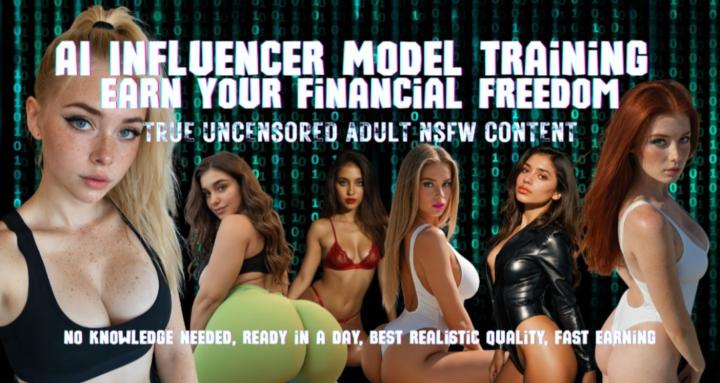
Trainity Lab offers a direct, workflow-focused educational platform designed specifically for creating hyper-realistic digital avatars. Unlike generic prompt engineering guides, this program isolates the specific challenges associated with virtual creators—primarily visual consistency across varied lighting, clothing, angles, and emotional expressions.
The September 2026 iteration updates its curriculum to reflect the latest state-of-the-art visual generation tools, custom LoRA fine-tuning workflows, real-time face-swapping techniques, and video synthesis models.
2. Core Curriculum Breakdown
The program is broken down into modular phases, guiding a creator from zero concept to full automated production:
-
Foundational Conceptualization: Naming, aesthetics, demographic target, and establishing brand voice.
-
Base Generation & Consistency: Methods for generating anchor images using custom Flux, Stable Diffusion XL, or Midjourney workflows.
-
LoRA Training & Model Fine-Tuning: Step-by-step guidance on setting up training datasets, cleaning images, configuring learning rates, and rendering custom weights.
-
ControlNet & Pose Manipulation: Achieving precision control over hand gestures, posture, facial direction, and outfit swaps without disrupting face continuity.
-
Video Generation & Motion: Lip-syncing tools, video-to-video motion transfer, and animating static portraits into interactive short-form videos.
-
Monetization & Brand Strategy: Monetizing virtual characters via brand deals, automated affiliate links, social media scaling, and digital products.
3. Practical Highlights: What Works Well
Realistic Consistency Workflows
The biggest obstacle in virtual creator development is avoiding face morphing between frames or scenes. The training provides actionable guidance on building high-grade dataset pools (30–50 curated angles) and tuning parameter checkpoints. The dataset preparation modules stand out as particularly useful.
Hands-On Technical Execution
Rather than focusing purely on theory, the modules are execution-heavy. Screen shares walk through popular UI tools, WebUI configurations, and cloud-GPU setups like RunPod, making advanced model training approachable for non-engineers.
Adaptability to Modern Generative Engines
With the shift in base architectures throughout 2025 and 2026, the updated September material ensures students are not reliant on outdated Stable Diffusion 1.5 pipelines. It incorporates modern higher-parameter base models and modern video synthesis engines.
4. Areas for Improvement
High Hardware / Cloud-GPU Costs
Training custom LoRAs locally requires substantial VRAM. While the program explains cloud rendering alternatives, beginners should be aware that third-party cloud computing incur ongoing operational costs outside the base course fee.
Fast-Paced Engine Shifts
Because the generative media landscape changes monthly, certain UI interfaces shown in video walk-throughs may slightly differ as platforms release new software updates.
5. Monetization Realities & Market Viability
Creating a visually stable avatar is only half the battle; acquiring audience attention is the rest. The monetization section offers solid advice on building organic social funnels on platforms like Instagram Reels, TikTok, and YouTube Shorts. However, success still hinges on solid content strategy, creative direction, and consistency in posting rather than technical generation alone.
6. The Final Verdict: Is It Worth It?
Trainity Lab delivers a practical, highly relevant blueprint for anyone looking to build a digital persona in late 2026. By removing trial-and-error out of dataset curation and technical parameter settings, it significantly reduces the learning curve. If you are serious about entering the virtual creator market or offering synthetic model production as an agency service, the structured breakdown provides strong return on investment.
Overall Rating: 4.6 / 5 Stars
