
Nicolas Cole & Dickie Bush – Self-Publishing Studio
$350.00 Original price was: $350.00.$49.00Current price is: $49.00.
- 24/7 Contact Support & Telegram - Ecomkevin_1
- You Can Request Any Courses
- Original Courses HD Qualite and links updated
Guaranteed Safe Checkout


Nicolas Cole & Dickie Bush – Self-Publishing Studio Review: Is It Worth It?
Writing and publishing a book used to require years of painful drafting, endless rejection letters from traditional publishing houses, and heavy marketing budgets. Today, digital self-publishing has fundamentally altered that landscape. Authors no longer need permission from gatekeepers to put their ideas into the world, build an audience, and generate real income.
Among the leading figures in this modern digital writing movement are Nicolas Cole and Dickie Bush, the co-founders of Ship 30 for 30 and Write With AI. Their program, Nicolas Cole & Dickie Bush – Self-Publishing Studio, promises to streamline the process of taking an idea from raw concept to a published, high-converting book on Amazon.
In this comprehensive, honest review, we break down what the Self-Publishing Studio offers, analyze its core methodologies, evaluate its real-world value, and help you decide if it is the right investment for your writing journey.
What Is Self-Publishing Studio?
The Self-Publishing Studio is a specialized curriculum designed to teach modern digital creators, non-fiction writers, and ghostwriters how to conceptualize, outline, write, format, and launch non-fiction books efficiently.
Unlike traditional writing courses that focus heavily on abstract literary style or slow-paced creative writing exercises, Cole and Bush bring a data-driven, practical framework to book publishing. The goal of the program is clear: eliminate guesswork, leverage audience data, speed up the writing process using tested frameworks, and launch books that build long-term authority and recurring revenue.
Who Are the Creators?
-
Nicolas Cole: A top digital writer, ghostwriter for CEOs and founders, and author of popular titles including The Art and Business of Online Writing and Snow Leopard. He pioneered modern approaches to short-form and long-form digital writing.
-
Dickie Bush: A former quantitative trader turned digital creator who built a massive audience by breaking down habits, systems, and leverage in digital content creation.
Together, their combined background combines deep writing craft with operational systems, making their frameworks highly practical and actionable.
Core Frameworks & Curriculum Breakdown
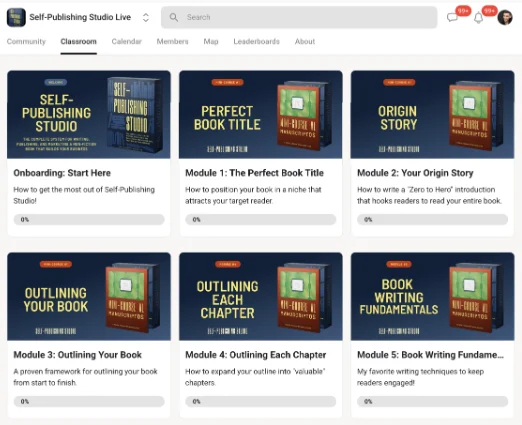
The program is structured logically, taking you through every single phase required to launch a non-fiction title successfully. Here is how the core framework operates:
[Phase 1: Validation] -> [Phase 2: Architecture] -> [Phase 3: Production] -> [Phase 4: Launch & Scaling]
1. Data-Driven Topic Selection & Testing
One of the primary reasons self-published books fail is that authors write what they think people want to read rather than what readers are actively searching for.
The studio starts by showing you how to test ideas in public using short-form digital content (such as X threads, LinkedIn posts, or newsletters). By paying attention to engagement metrics, feedback, and reader questions, you validate your book topic before writing a single chapter. This validation process drastically lowers the commercial risk of your project.
2. Book Architecture & Outlining
Writing a 30,000 to 50,000-word book can be intimidating without a clear blueprint. Cole and Bush introduce structural templates tailored specifically to non-fiction genres, such as:
-
The Educational Blueprint: How-to guides and technical manuals.
-
The Mindset Shift Framework: Philosophical or transformational self-help books.
-
The Playbook Model: Industry-specific strategy guides for professionals and founders.
By structuring the table of contents down to sub-headings and core takeaways before drafting, the actual writing process transforms into filling in structured sections rather than staring at a blank screen.
3. Accelerated Drafting Systems
Self-Publishing Studio details daily writing routines, modular drafting techniques, and AI-assisted workflows (using ChatGPT and specialized prompts) to speed up drafting without sacrificing quality or personal voice. The system teaches you how to maintain consistent tone, structure arguments logically, and avoid writer’s block.
4. Professional Formatting & KDP Setup
A great manuscript will still fail if the presentation looks amateurish. The program guides you through:
-
Inner book formatting for eBook (ePub) and print (paperback/hardcover).
-
Designing high-converting book covers that stand out on Amazon search results.
-
Writing optimized Amazon book descriptions, choosing high-traffic categories, and selecting targeted keywords.
5. Launch Strategies & Reader Funnels
A book should not just be a static product; it can be an entry point into a broader business ecosystem. The curriculum outlines launch sequence tactics, how to secure early reviews ethically, and methods for converting book readers into newsletter subscribers, consulting clients, or course buyers.
What Makes This Program Different?
The self-publishing education market is crowded, but this course stands out due to several key factors:
| Feature | Traditional Publishing Approach | Typical Self-Publishing Courses | Self-Publishing Studio |
|---|---|---|---|
| Validation | Pitch agents; wait months | Guess market demand | Test ideas in public first |
| Drafting Speed | 12 to 24 months | 3 to 6 months | 30 to 60 days using frameworks |
| Monetization | Low royalties (10-15%) | Amazon KDP royalties only | KDP + Backend Funnels & Services |
| AI Integration | Ignored or discouraged | Generic prompt dumps | Workflow integration for research/editing |
Pros and Cons: An Honest Evaluation
To make an informed decision, it is essential to weigh the strong points against potential limitations.
The Pros
-
Highly Actionable Frameworks: The course avoids vague advice. Everything is broken down into checklists, templates, and exact steps.
-
Focus on Modern Digital Publishing: Traditional book writing rules often don’t apply to the fast-paced digital landscape. This curriculum is designed specifically for today’s reader attention spans.
-
Leverage Beyond Book Sales: The course teaches you how to treat your book as a strategic asset to build personal brand authority, generate leads, and land high-paying clients or speaking engagements.
-
Leveraging AI Responsibly: Rather than pushing low-quality AI auto-generation, it demonstrates how to use AI as a research partner, editor, and brainstorming assistant.
The Cons
-
Primarily Focused on Non-Fiction: If your goal is to write fiction, fantasy, or poetry, this course is not designed for you. The frameworks rely heavily on non-fiction structures.
-
Fast-Paced System: The rapid testing and drafting methods require discipline. Writers who prefer slow, unstructured artistic exploration may find the system too structured or business-oriented.
-
Requires Marketing Effort: While the program provides launch frameworks, selling books still requires effort in audience building or leveraging Amazon’s ecosystem effectively.
Who Is This Course Best For?
-
Digital Creators & Newsletter Writers: Content creators who already have short-form posts or articles and want to package their expertise into a cohesive book.
-
Subject Matter Experts & Consultants: Professionals, agency owners, and coaches looking to publish a book as a high-value lead magnet and authority builder.
-
Freelancers & Ghostwriters: Writers looking to offer premium book ghostwriting or editing services to clients using standardized, repeatable systems.
-
First-Time Non-Fiction Authors: Anyone who has struggled with writer’s block, messy drafts, or uncertainty about how to navigate Amazon KDP.
Real-World ROI: Is the Investment Worth It?
When assessing the value of a publishing program, look beyond direct royalty checks from Amazon. While high sales numbers are always the goal, a well-executed non-fiction book delivers ROI across multiple channels:
-
Direct Book Revenue: Earn 60% to 70% royalties on Amazon KDP without paying traditional publisher fees.
-
Authority & Positioning: Position yourself as a recognized expert in your niche, opening doors to podcast appearances, media features, and partnerships.
-
Backend Monetization: Convert casual readers into high-ticket clients, course members, or long-term email subscribers using strategically placed lead magnets within your book.
If you apply the validation, drafting, and launch systems taught by Cole and Bush, the time saved and potential business growth far outweigh the initial investment in the training.
Final Verdict
The program delivered by Nicolas Cole and Dickie Bush brings much-needed clarity, structure, and modern strategy to the self-publishing world. By treating a book as a validated digital product rather than an exercise in guesswork, the system drastically increases your chances of finishing your manuscript and executing a successful launch.
If you are serious about writing a non-fiction book, building a recognized brand, and leveraging modern digital publishing frameworks to grow your income, Self-Publishing Studio is one of the most practical and well-designed resources available today.
Final Rating: 4.8 / 5
