
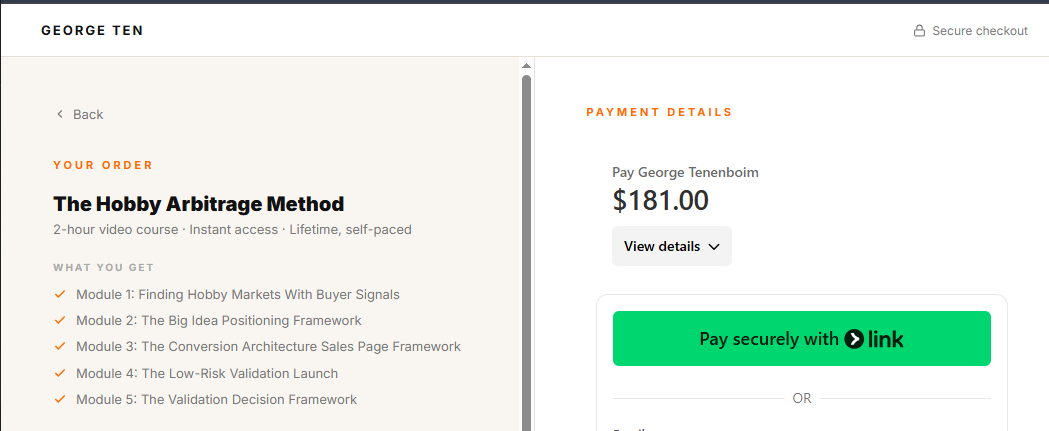
George Ten – Hobby Arbitrage Method
$199.00 Original price was: $199.00.$45.00Current price is: $45.00.
- 24/7 Contact Support & Telegram - Ecomkevin_1
- You Can Request Any Courses
- Original Courses HD Qualite and links updated
Guaranteed Safe Checkout


George Ten – Hobby Arbitrage Method: A Detailed Review
Finding a sustainable online business model often feels like searching for a needle in a haystack. Many traditional paths—like high-ticket drop shipping, agency retainers, or low-margin e-commerce—require significant upfront capital, high operational overhead, or constant client management.
George Ten – Hobby Arbitrage Method introduces a refreshing alternative: leveraging high-interest consumer hobbies to create high-converting digital offers. This comprehensive review breaks down the mechanics of the approach, its core framework, key strengths, potential drawbacks, and whether it warrants your time and investment.
What Is the Hobby Arbitrage Method?
Created by digital marketer and copywriter George Ten, this methodology focuses on identifying overlooked enthusiast markets and positioning simple digital products or communities directly where attention already exists.
Rather than building a brand from scratch in overcrowded markets like general weight loss or basic financial advice, the framework targets hyper-passionate communities—such as specialized crafts, niche sports, collectible collecting, or technical hobbies. These audiences already invest significant time and money into their interests, making them far more receptive to specialized information, guides, and curated resources.
Key Components of the Strategy
The core system is structured around four primary pillars designed to guide an offer from initial research to recurring revenue:
1. Niche Selection and Signal Detection
Not all hobbies are created equal for digital products. The method prioritizes sub-cultures that display clear commercial intent and high emotional investment. You learn how to evaluate online forums, social channels, and search demand to verify whether a hobby group actively purchases digital guidance, templates, or community access.
2. Low-Friction Offer Design
Instead of spending months building complex, 40-hour video courses that rarely get completed, the strategy advocates for direct, high-value digital assets. These might include concise PDFs, curated toolkits, structured frameworks, or targeted mini-workshops that solve a single, hyper-specific problem for the hobbyist.
3. Traffic Arbitrage & Attention Capture
Capturing attention efficiently is central to the framework. Instead of spending heavily on cold traffic via traditional ad platforms, the method emphasizes organic positioning, strategic partnerships, and leveraging existing attention hubs within the niche. The goal is to lower customer acquisition costs significantly relative to the lifetime value of the customer.
4. Conversion Dynamics & Copywriting
Drawing heavily from high-converting direct-response copywriting principles, the strategy outlines how to write sales copy that speaks directly to the hobbyist’s language, insider terminology, and specific aspirations. This builds immediate rapport and trust, driving conversions without aggressive or deceptive sales tactics.
Strategic Breakdown: How It Operates
[ Identify High-Intent Hobby Niche ]
               │
               ▼
[ Uncover Specific Pain Points & Goals ]
               │
               ▼
[ Build Targeted Digital Solution ]
               │
               ▼
[ Leverage Existing Attention Hubs ]
               │
               ▼
[ Convert via Authentic Copywriting ]
Who Is This Methodology Best Suited For?
-
Digital Product Creators: Anyone looking to launch info-products without entering hyper-competitive broad markets.
-
Copywriters & Marketers: Professionals wanting to apply direct-response marketing principles to passionate, untapped audiences.
-
Solopreneurs: Individual operators who want a lean, high-margin business model with minimal operational overhead.
-
Niche Enthusiasts: Individuals who already possess deep knowledge about a specific hobby and want to monetize that expertise effectively.
In-Depth Analysis: Strengths and Drawbacks
To provide a complete perspective, here is an honest look at where the system excels and where users might face challenges:
Pros
-
High Profit Margins: Digital products carry near-zero delivery costs, resulting in favorable unit economics.
-
Lower Competition: Focusing on specific micro-niches avoids head-to-head battles with major legacy brands.
-
Authentic Customer Connection: Hobbyists are naturally enthusiastic about their interests, making marketing conversations more engaging and less sales-focused.
-
Actionable Framework: The concepts are presented with clear operational steps rather than high-level theory.
Cons
-
Market Sizing Limitations: Extremely small micro-niches can hit a revenue ceiling faster than mass-market offers.
-
Requires Deep Audience Understanding: Success depends heavily on capturing the unique tone and terminology of the target group; surface-level research will not suffice.
-
Execution-Dependent: Like any business system, success requires consistent testing, iteration, and hands-on execution.
Comparison With Alternative Online Business Models
| Business Model | Upfront Capital Required | Competition Level | Profit Margins | Scalability |
|---|---|---|---|---|
| Hobby Arbitrage | Low | Low to Moderate | High (80–90%) | High |
| Traditional E-Commerce | High | High | Low (10–25%) | Moderate |
| Client Agency Work | Low | High | Moderate (30–50%) | Hard to Scale |
| SaaS Development | Very High | Moderate to High | High (70–85%) | Very High |
Practical Execution Checklist
If you decide to implement this approach, follow this step-by-step sequence to get your project off the ground:
-
Conduct Market Audits: Identify 3 to 5 enthusiast hobbies where online participation and spending are high.
-
Analyze Community Conversations: Read forum threads, social media groups, and review sections to isolate common frustrations or skill gaps.
-
Outline a Minimum Viable Product (MVP): Draft a practical guide, resource list, or template that solves one specific issue identified in your research.
-
Draft the Conversion Page: Write direct-response copy focusing on the specific outcomes and transformations the resource delivers.
-
Establish Traffic Inflow: Set up outreach or organic distribution channels in spaces where your target audience regularly gathers.
-
Iterate Based on Feedback: Collect buyer feedback immediately post-purchase to refine both the product quality and sales presentation.
Final Verdict
The George Ten – Hobby Arbitrage Method offers a practical, strategic framework for modern digital creators. By shifting the focus away from saturated mainstream industries toward enthusiastic, highly engaged hobby communities, it opens up a clear pathway to building a lean, sustainable online business. For creators, marketers, and solopreneurs willing to dive deep into audience research and authentic copywriting, this framework provides a solid blueprint for success.
