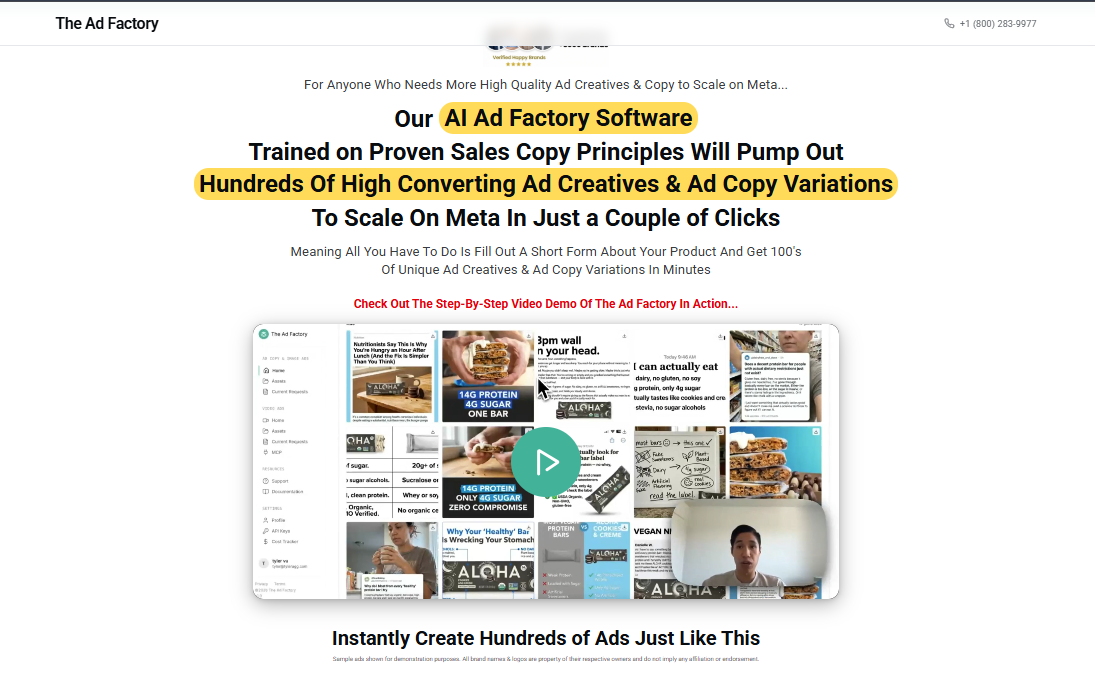
Ad Oven – AI Ad Factory + Ad Factory Dashboard
$148.00 Original price was: $148.00.$38.00Current price is: $38.00.
- 24/7 Contact Support & Telegram - Ecomkevin_1
- You Can Request Any Courses
- Original Courses HD Qualite and links updated
Guaranteed Safe Checkout


Ad Oven – AI Ad Factory + Ad Factory Dashboard: The Honest, In-Depth Review
Digital marketing moves at a breakneck pace. Crafting high-converting ad copy, designing visual assets, testing endlessly, and managing campaign metrics across multiple platforms can easily drain hours of your week—and thousands of dollars from your budget. Enter Ad Oven – AI Ad Factory + Ad Factory Dashboard, a platform designed to streamline ad generation and campaign management into a single, cohesive workflow.
Whether you run a fast-scaling e-commerce brand, manage multiple client accounts at an agency, or operate as a solo marketer, having an efficient production line is critical. In this comprehensive review, we take a close, unbiased look at Ad Oven, exploring its core capabilities, user interface, campaign dashboard, performance, and overall value proposition.
What is Ad Oven?
Ad Oven is an AI-powered creative suite and campaign management engine built to generate, organize, and monitor ad performance across digital advertising platforms. Instead of requiring you to write copy from scratch, design visuals separately, and manually sync data, the tool acts as an automated “factory” for your creative needs.
The software is built around two primary components:
-
AI Ad Factory: The generative engine that produces creative variations, headline suggestions, ad copy, and multi-format media tailored to specific demographics and platforms.
-
Ad Factory Dashboard: The central command hub where teams can review generated assets, organize campaign structures, track performance metrics, and iterate on winning creatives.
Key Features & Capabilities
To understand if this tool fits your workflow, let’s break down its primary feature set.
                    ┌─────────────────────────────────────────┐
                    │  Ad Oven – AI Ad Factory + Dashboard   │
                    └────────────────────┬────────────────────┘
                                         │
               ┌─────────────────────────┴─────────────────────────┐
               ▼                                                   ▼
┌─────────────────────────────┐                     ┌─────────────────────────────┐
│       AI Ad Factory         │                     │    Ad Factory Dashboard     │
├─────────────────────────────┤                     ├─────────────────────────────┤
│ • Automated Copy Generation │                     │ • Creative Asset Management │
│ • Visual Asset Creation     │                     │ • Real-time Analytics Hub   │
│ • Audience Persona Alignment│                     │ • Campaign Iteration Tools  │
│ • Cross-Platform Formatting │                     │ • Team Collaboration Spaces │
└─────────────────────────────┘                     └─────────────────────────────┘
1. Automated Copy & Creative Generation
Writing converting ad copy requires understanding consumer psychology, pain points, and platform dynamics. The creative engine uses specialized marketing frameworks (such as AIDA—Attention, Interest, Desire, Action, and PAS—Problem, Agitate, Solution) to draft:
-
Short-form social headlines for platforms like Facebook and Instagram
-
Direct-response search ad text suited for Google Ads
-
Punchy hooks for video scripts and TikTok variations
2. Multi-Format Visual Output
Designing ads across different dimensions (1:1 square, 9:16 vertical stories, 16:9 landscape) usually requires manual resizing and repositioning. The media factory generates multi-format variations automatically, preserving brand consistency while conforming to platform guidelines.
3. The Central Dashboard Hub
Generating creative assets is only half the battle; managing them effectively is equally vital. The centralized hub provides:
-
Asset Organization: Filter creatives by campaign, format, audience segment, or performance rating.
-
Performance Tracking: Monitor key metrics such as CTR (Click-Through Rate), CPC (Cost Per Click), and overall conversion rates directly beside the creative assets.
-
Rapid Iteration: Duplicate winning ad variants and generate immediate sub-variations with slight tweaks in copy or visual emphasis.
Hands-On Experience: How the Platform Operates
Navigating the workspace is straightforward. Here is a step-by-step breakdown of how a standard campaign workflow functions from initial prompt to deployment.
-
Brand & Audience Input: You start by defining your product details, core value proposition, target demographic, and tone of voice.
-
Framework Selection: Choose the preferred marketing framework or platform target (e.g., direct-response e-commerce vs. SaaS lead generation).
-
Generation Phase: The AI engine processes the input and produces multiple visual and copy combinations.
-
Review in the Dashboard: Open the main interface to review, edit, tag, and approve generated variations.
-
Deployment & Tracking: Export assets directly or sync them with your advertising accounts to observe live performance data inside your workspace.
Detailed Performance Breakdown
| Metric / Aspect | Performance Assessment | Detail / Notes |
|---|---|---|
| Generation Speed | High | Produces multi-format variants in under 2 minutes. |
| Copy Quality | Above Average | Strong direct-response focus; benefits from minor human tweaking. |
| User Interface | Intuitive | Minimal learning curve; clear distinction between creation and analytics. |
| Asset Management | Excellent | Easy tagging, sorting, and side-by-side variation review. |
| Integration Flexibility | Good | Supports standard export formats and primary advertising channels. |
Pros & Cons
An honest review must look at both strengths and areas where improvement is needed.
Pros
-
Drastic Time Savings: Reduces the time required to conceptualize and execute a multi-channel creative test from hours to minutes.
-
Centralized Creative Management: Combines asset generation and analytics monitoring under one roof, reducing software clutter.
-
Framework-Driven Copy: Generates text rooted in established marketing methodologies rather than generic sentences.
-
Rapid Multivariate Testing: Allows marketers to test dozen of hooks and angles without starting from scratch every time.
Cons
-
Requires Initial Input Quality: Like all generative tools, garbage in equals garbage out; vague brand descriptions yield generic output.
-
Human Touch Still Needed: Fine-tuning nuances, brand voice specifics, and legal compliance disclosures still requires human review.
Who Is This Tool Best Suited For?
-
Digital Marketing Agencies: Agencies handling multiple client accounts can drastically speed up creative production and reporting.
-
E-Commerce Brands: E-commerce stores that require constant creative refreshes to combat ad fatigue across Meta, TikTok, and Google.
-
Media Buyers & Growth Marketers: Performance marketers who rely heavily on continuous multivariate split-testing.
-
Solopreneurs & Small Business Owners: Business owners who lack dedicated design or copywriting teams but need professional-grade ads.
Final Verdict: Is It Worth It?
If your primary marketing bottleneck is creative velocity—the ability to continuously produce, test, and analyze new ad concepts—the combination of automated creative generation and unified campaign tracking offers significant leverage.
While human strategic input remains indispensable for overarching brand positioning, Ad Oven – AI Ad Factory + Ad Factory Dashboard provides an effective, streamlined platform that bridges the gap between raw copy generation and performance management. For marketing teams looking to scale their creative output without linearly increasing overhead, it earns a strong recommendation.
