
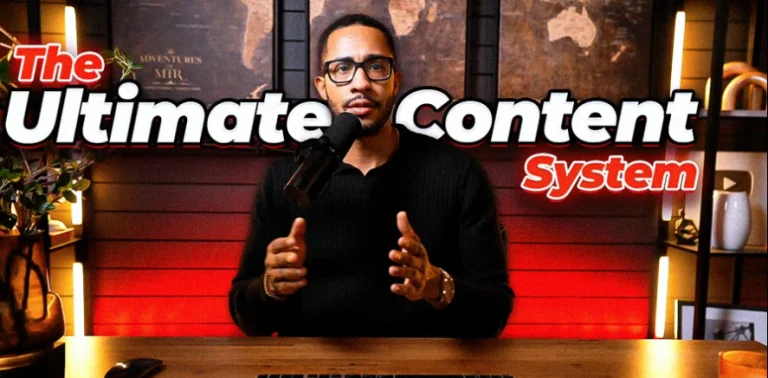
Denée Seaton – Freelance Creative Strategist Program
$993.00 Original price was: $993.00.$60.00Current price is: $60.00.
- 24/7 Contact Support & Telegram - Ecomkevin_1
- You Can Request Any Courses
- Original Courses HD Qualite and links updated
Guaranteed Safe Checkout


Denée Seaton – Freelance Creative Strategist Program Review: Is It Worth It?
The digital advertising ecosystem has undergone a massive shift over the last few years. High-performing ad accounts no longer depend solely on media buying hacks, complex media structures, or audience targeting tricks. Instead, performance is heavily driven by creative content—specifically direct-response video, authentic UGC (User-Generated Content), compelling ad copy, and strategic visual positioning.
As e-commerce brands and agencies scramble to churn out high-converting video ads, a distinct remote role has exploded in demand: the Creative Strategist. Sitting right at the intersection of performance marketing, psychological positioning, and content production, creative strategists are the architects behind multi-million-dollar ad campaigns.
Enter the Denée Seaton – Freelance Creative Strategist Program. Built specifically to transition freelance marketers, graphic designers, media buyers, and content creators into high-ticket performance creative strategists, this training promises a practical, end-to-end framework. But does it deliver on its promises, or is it just another overhyped online course?
In this comprehensive, honest review, we dive deep into the program’s structure, core modules, real-world value, potential drawbacks, and final verdict to help you decide if it is the right career investment for you.
What Is the Program and Who Is Denée Seaton?
Denée Seaton is an established performance creative specialist known across the performance marketing and e-commerce industries. With extensive hands-on experience crafting performance video campaigns, analyzing creative data, and managing creative teams for direct-to-consumer (DTC) brands, her methodologies focus on real-world application rather than abstract theory.
The program is structured as an actionable blueprint. It bridges the gap between creative visual execution and hard performance metrics. Unlike typical video editing or graphic design tutorials, this training focuses on the strategy side: how to research competitors, uncover deep customer pain points, write high-converting scripts, brief creators, analyze ad performance metrics, and iteratively optimize creative assets for platforms like Meta, TikTok, and YouTube.
Program Breakdown: Key Modules and Curriculum
The curriculum is divided into sequential phases designed to take a student from fundamental concepts to pitching high-paying retainers.
┌─────────────────────────────────────────────────────────────┐
│                    LEARNING ROADMAP                         │
├──────────────────────────────┬──────────────────────────────┤
│ 1. Foundations & Mindset     │ Market Analysis & Strategy   │
│ 2. Deep Customer Research    │ Angle & Script Development   │
│ 3. Creator Briefing & UGC    │ Performance Analytics & Iteration │
│ 4. Pitching & Client Retainers│ Agency / Freelance Scaling  │
└──────────────────────────────┴──────────────────────────────┘
Module 1: The Role & Fundamentals of Creative Strategy
The introductory section clarifies the exact responsibilities of a Creative Strategist. It delineates where media buying ends and creative strategy begins. You learn how to speak the language of both performance marketers (ROAS, CPA, CTR, Hook Rate, Hold Rate) and creative production teams.
Module 2: Market Intelligence & Competitor Research
Before writing a single word of a script, strategy requires research. This module details systematic methods for analyzing competitor ad libraries, identifying market trends, dissecting customer reviews (via Amazon, Reddit, and Trustpilot), and building detailed customer avatars. You learn how to isolate specific emotional triggers that drive purchases.
Module 3: Concepting, Angles, and Direct-Response Scriptwriting
This is the core engine of the program. Denée lays out clear frameworks for building direct-response ad creative, including:
-
Hook Development: Methods to stop the scroll in the first 3 seconds.
-
Problem-Agitation-Solution (PAS) Sequences: Writing scripts that hold attention.
-
Visual Storyboarding: Pairing spoken audio or text-on-screen with specific visual direction.
-
Offer Positioning: Presenting bonuses, guarantees, and pricing cleanly on video.
Module 4: Creator Sourcing, Briefing, and Production Management
Great scripts fail if the creator performance is flat or visually unappealing. This module details how to source authentic UGC creators, negotiate usage rights, and write foolproof Creative Briefs. The briefs instruct non-professional actors on framing, lighting, line delivery, and raw footage variations.
Module 5: Creative Analytics and Data-Driven Iteration
A strategy program would be incomplete without data analysis. You learn how to navigate Meta Ads Manager and TikTok Ads Dashboard from a creative standpoint:
-
Analyzing Thumb-Stop / Hook Rates (3-second video views divided by impressions).
-
Tracking Hold Rates (ThruPlays or 15-second views divided by initial views).
-
Identifying creative fatigue vs. copy fatigue.
-
Systematic iteration: How to test new hooks on winning body copy or swap calls-to-action without re-shooting entire videos.
Module 6: Freelance Business Operations, Pricing, and Pitching
The final section covers client acquisition and business building. It teaches you how to audit a brand’s current creative footprint, package your services into monthly retainers rather than low-cost hourly fees, build a portfolio (even without past clients), and pitch brands effectively.
What Makes This Training Unique?
| Feature / Metric | Traditional Marketing Courses | Denée Seaton’s Program |
|---|---|---|
| Primary Focus | Platform mechanics & Media Buying | Creative production & Performance strategy |
| Actionability | General theory & high-level concepts | Standard Operating Procedures (SOPs), templates, briefs |
| Data Interpretation | basic ROAS & Cost-per-click | Creative-specific metrics (Hook rate, Hold rate, Visual retention) |
| Client Acquisition | Generic outreach templates | Creative Audit frameworks tailored for DTC brands |
Real-World Templates and SOPs
One of the stand-out elements of the course is the collection of downloadable assets. Students receive actual client-facing documents, including script templates, creator briefing sheets, creative performance reporting dashboards, and onboarding forms. Having ready-to-use documents significantly shortens the time required to land and service your first client.
Bridge Between Creative and Data
Many creatives struggle with spreadsheets, while many analytical media buyers lack aesthetic sense and copywriting polish. This program acts as a translator between both sides, giving you a rare skill set that modern e-commerce brands desperately seek.
Honest Assessment: Pros vs. Cons
To maintain an authentic review, it is important to evaluate both the strengths and the limitations of the course.
The Strengths (Pros)
-
High Market Demand: E-commerce brands are scaling back traditional media buying spend and reallocating budget toward creative testing.
-
No Media Buying Required: You do not need to manage massive ad budgets or take on technical ad account setups yourself.
-
Practical & Actionable: Packed with step-by-step frameworks rather than motivational fluff.
-
Clear Business Model: Focuses on high-ticket monthly retainers rather than cheap, one-off gig services.
The Drawbacks (Cons)
-
Requires Active Effort: This is not a “get-rich-quick” course. Mastering scriptwriting and data analysis requires significant practice and deep thinking.
-
Dynamic Industry: Social media ad platforms, algorithm changes, and creative trends shift rapidly; techniques must be adapted continuously over time.
-
Cold Outreach Necessary: While the pitching strategies are sound, acquiring your first few retainers still demands persistence, outreach, and proof of concept.
Who Is This Course Ideal For?
-
Freelance Content Creators & UGC Creators: Who want to step up from earning $100 per video to charging $2,000–$5,000/month as strategic partners.
-
Media Buyers: Looking to offer high-value creative strategy alongside ad account management to boost client retention.
-
Copywriters & Graphic Designers: Who want to specialize in high-converting paid social assets.
-
Agency Owners: Needing a structured framework to train in-house team members on performance creative production.
Expected ROI and Career Outlook
As digital advertising costs fluctuate, performance creative has become the primary lever for brand profitability. A skilled strategist who can lift a brand’s ad conversion rate or lower acquisition costs is easily worth a multi-thousand-dollar monthly retainer.
By completing the training, applying the market research workflows, and building a polished portfolio using the provided frameworks, the return on investment can be realized by signing just one or two monthly retainer clients.
Final Verdict
The Denée Seaton – Freelance Creative Strategist Program is a well-structured, comprehensive training ground for modern performance marketing. It strips away academic theory and gives you a practical workflow for research, scriptwriting, creator coordination, and creative data analysis.
If you are looking to break into the performance creative space, command higher freelance rates, and build a scalable remote marketing career, this program provides a clear and reliable roadmap.
Final Score: 4.8 / 5
